

Aluminium front doors and composite front doors are two of the most long-lasting front-door types available, but are they similar in other ways too? Aluminium front doors are usually more expensive than composite, but does that mean they are superior? It can be overwhelming when you’re trying to decide which type of front door to choose. Here, we’ll look at the differences in construction between composite and aluminium front doors and go on to discuss what this means in terms of performance.
Aluminium front doors
It’ll come as no surprise to learn that aluminium front doors are mostly made of aluminium sheeting for the outer of the door and the frames, including the glazing panel for any windows in the door. There is usually a plastic-based insulation material within the door to improve thermal efficiency performance, but the rest of the door is made from aluminium.

Composite front doors
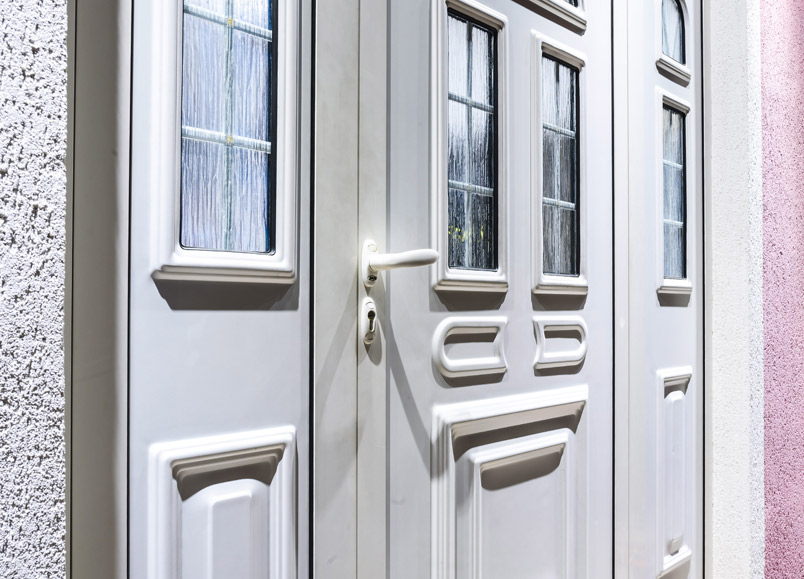
Composite front doors use a variety of materials to try to deliver the best performance from each, while keeping costs down. For example, the frame of the door and around any glass panels is usually UPVC. The door skin is often made from GRP (glass reinforced plastic) and wood or plastic can be also used for external frames in some cases. Insulation within the door is often polyurethane or other plastic-based material.
How do aluminium and composite doors perform?
Both types of doors are strong and long-lasting. However, in both areas, aluminium front doors do outperform composites. For example, composite doors are expected to last for about 30 years – which is certainly better than UPVC – but aluminium doors will last for over 45 years. Composite doors are strong, but aluminium is much stronger and lighter, which is another advantage.
The main issue with composite doors is that they are made from different types of material. These different materials will expand and contract at different rates and, over time, can warp which will mean not fitting snugly within the doorframe. This will reduce the thermal efficiency and even the security of the door itself.
An extremely important consideration when choosing your new front door is the aesthetics. Does the design fit with the style of your home? If you live in a period or heritage home (or in a conservation area) you will need to choose a door that matches your home perfectly. Composite doors tend to be finished to look like wooden doors and are more traditional in style. Aluminium front doors tend to look sleeker and more contemporary. This is because the strong and lightweight nature of aluminium allows for more adventurous designs, such as larger doors favoured by architects.
Both composite and aluminium doors come in a range of finishes and colours. The main difference is that aluminium finishes are less likely to fade or discolour over time, whereas the composite doors may change colour in the same way as UPVC does over time.
Finally, we should look at the environmental credentials of both types of doors. Aluminium is the most recycled material in the world today and your new door is likely to made from recycled material and it can be recycled again when it (eventually) gets to the end of its life. Composite doors are difficult to recycle as they are mixed materials, and certainly the UPVC elements can’t be recycled at all.
Aluminium front doors from Woodcraft Windows
At Woodcraft we offer a range of made to measure aluminium front doors that will provide the strength, security, longevity and look you need for your home.

